Introduction to Robot Technologies
Robot technologies are transforming the modern world by changing how people work, communicate, manufacture products, explore dangerous environments, and perform everyday activities. From intelligent humanoid robots and automated factories to medical robots and self-driving machines, robotics has become one of the most exciting areas of modern technology.
In 2026, robotics is advancing through the combination of artificial intelligence (AI), machine learning, computer vision, advanced sensors, cloud computing, and autonomous control systems. These technologies are helping robots move beyond simple, repetitive tasks and become increasingly capable of understanding their surroundings, responding to instructions, and adapting to different situations.
Robots are no longer limited to industrial production lines. They are being developed for hospitals, warehouses, farms, homes, laboratories, transportation networks, and even space exploration. Some can perform highly precise surgical movements, while others can move heavy materials, inspect dangerous infrastructure, or assist people with disabilities.
One of the most important developments is the emergence of physical AI. This technology connects intelligent AI models with physical machines, allowing robots to perceive and interact with the real world. According to Deloitte’s 2026 technology analysis, this convergence is creating opportunities across manufacturing, healthcare, public utilities, and logistics.
As robotics continues to develop, understanding its technologies, applications, benefits, limitations, and future possibilities is becoming increasingly important for students, developers, businesses, and technology enthusiasts.
1. What Is Robot Technology?
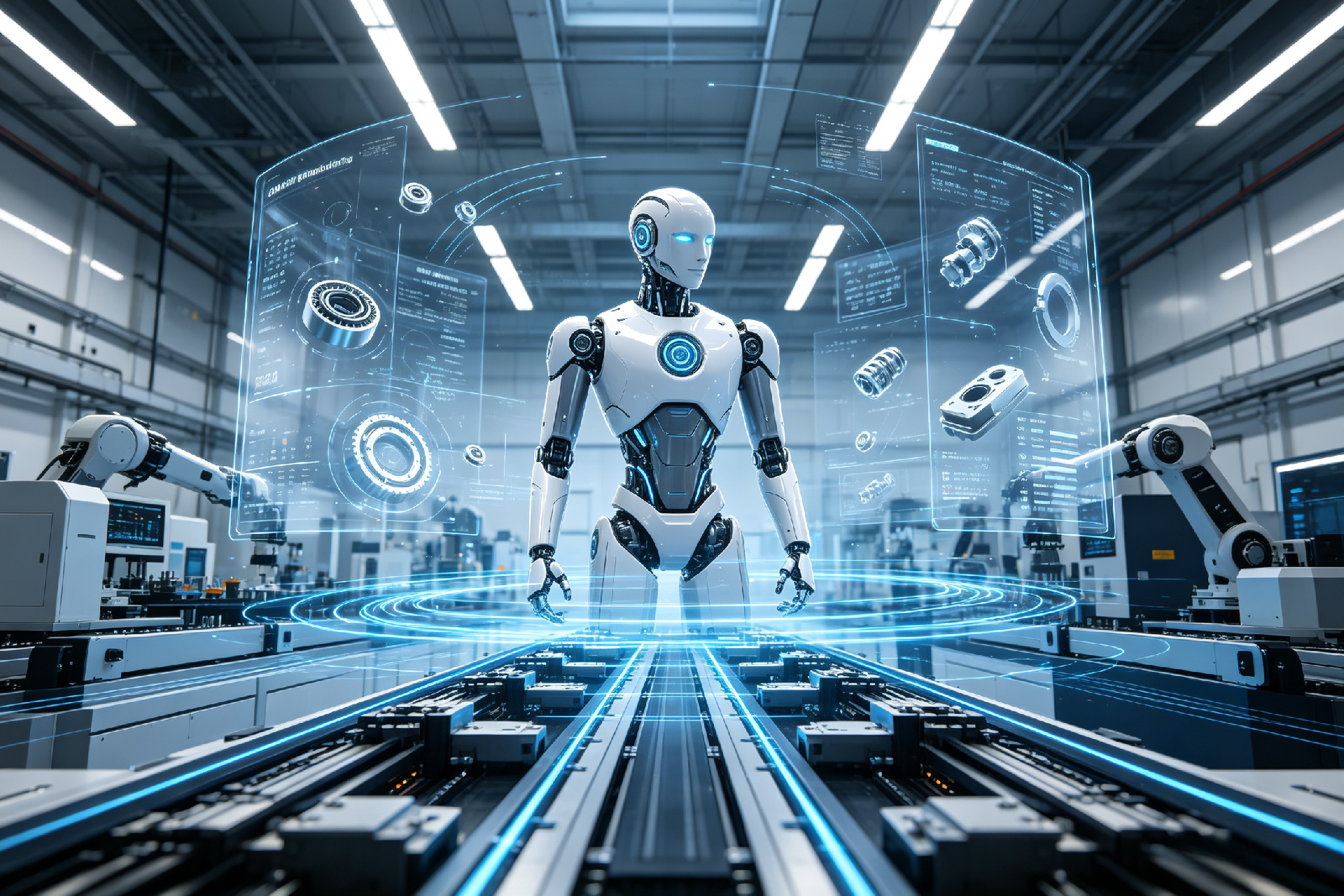
Robot technology is the combination of mechanical engineering, electronics, computer programming, artificial intelligence, and control systems used to design and operate machines that can perform tasks automatically or with human assistance.
A robot is generally a programmable machine that can sense its environment, process information, and perform physical actions. Robots vary significantly in size, shape, complexity, and functionality.
Some robots are simple machines programmed to repeat one movement. Others use advanced AI algorithms to recognize objects, navigate unfamiliar environments, understand voice commands, and make decisions within defined limits.
A modern robotic system usually includes several essential components:
- Sensors: Collect information about the surrounding environment, including distance, temperature, pressure, light, and movement.
- Actuators: Convert electrical, hydraulic, or pneumatic energy into physical movement.
- Controllers: Process information and coordinate a robot’s actions.
- Artificial intelligence: Helps robots recognize patterns, interpret instructions, plan actions, and adapt to changing conditions.
- Power systems: Supply the energy needed to operate the robot.
- Software: Provides the programming, communication, decision-making, and control capabilities.
All these components work together to enable robotic machines to perform tasks efficiently and consistently.
2. Artificial Intelligence in Robotics
Artificial intelligence is one of the most influential technologies shaping modern robotics. Traditional robots generally follow predefined instructions. AI-powered robots can use data, perception, and learned patterns to handle more complex situations.
For example, a traditional warehouse robot might follow a fixed route to transport boxes. An AI-enabled robot can use cameras and navigation algorithms to recognize obstacles, identify alternative paths, and adapt to changes in the warehouse environment.
AI is used in robotics for several important functions:
Computer vision: Allows robots to recognize objects, people, surfaces, and environmental conditions through cameras and image-processing algorithms.
Machine learning: Enables systems to learn patterns from training data and improve performance on specific tasks.
Natural language processing: Helps robots interpret human language and respond to spoken or written commands.
Predictive maintenance: Analyzes machine performance data to identify signs of possible mechanical failure.
Intelligent planning: Helps robots select sequences of actions to accomplish tasks while considering obstacles, resources, and safety requirements.
An important development is the use of vision-language-action models. These systems combine visual perception, language understanding, and robotic actions. Instead of requiring every movement to be explicitly programmed, a robot may receive a high-level instruction, interpret the scene, and select suitable actions.
However, AI does not make robots automatically intelligent in every situation. Their capabilities depend on training data, sensors, software, computing resources, and the environments in which they operate.
3. Humanoid Robots: Machines Designed Like Humans
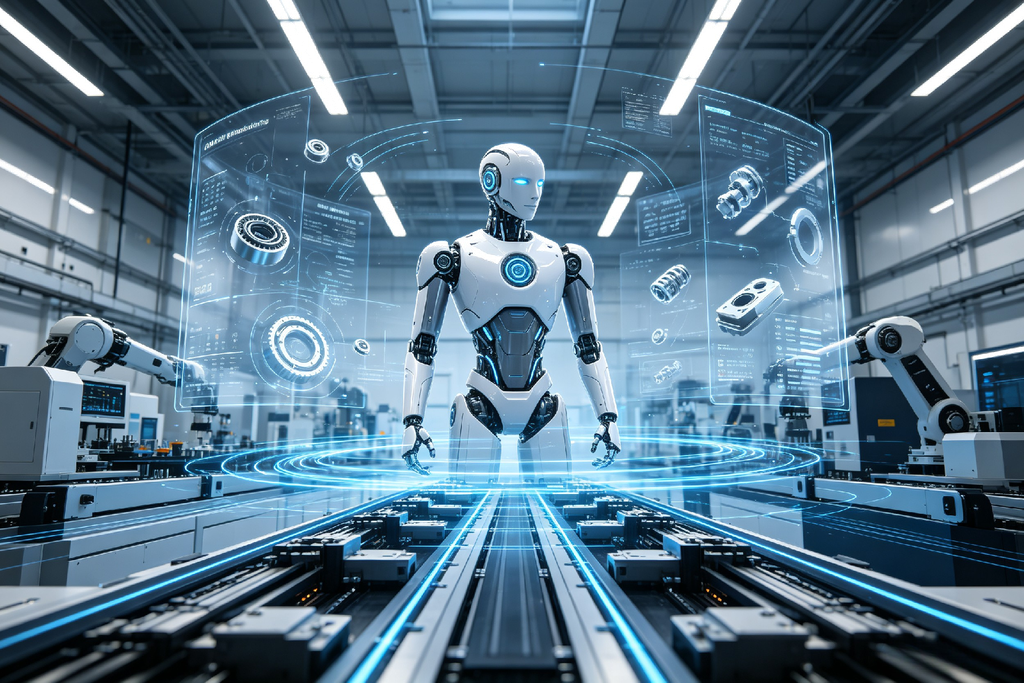
Humanoid robots are machines designed with human-like body structures. They may have a head, torso, arms, hands, and legs, although not every humanoid robot has all these features.
Their human-like form can be useful in environments designed for people, including factories, offices, hospitals, and homes.
Modern humanoid robots are being developed to perform tasks such as:
- Moving objects and materials.
- Carrying out manufacturing activities.
- Navigating buildings and indoor spaces.
- Supporting research and educational projects.
- Assisting with selected service activities.
- Interacting with humans through speech and gestures.
Companies and research organizations are developing humanoid robots with increasingly advanced movement, manipulation, and AI capabilities.
In 2025, approximately 7,000 humanoid robots were sold worldwide for industrial and professional service applications, according to figures reported by the International Federation of Robotics in September 2026. This remains a small market compared with conventional industrial robotics, and many humanoid deployments are still in research or pilot stages.
Humanoid robotics faces several challenges. Walking and balancing require substantial energy and precise control. Human hands are difficult to reproduce mechanically. Robots also need to handle unexpected situations, work safely around people, and justify their cost.
Although humanoid robots attract significant attention, specialized robots often remain more practical for particular industrial tasks.
4. Industrial Robotics and Smart Factories
Industrial robotics is one of the most established applications of robot technology. Factories use robotic systems to perform repetitive, precise, physically demanding, and potentially hazardous activities.
Industrial robots are commonly used for:
- Welding and metal fabrication.
- Painting and coating.
- Assembly and manufacturing.
- Packaging and palletizing.
- Quality inspection.
- Material handling.
- Machine tending.
Modern industrial facilities are increasingly integrating robots with artificial intelligence, industrial Internet of Things (IIoT) devices, sensors, and cloud-connected management systems.
This integration contributes to the development of smart factories.
In a smart factory, robotic systems can exchange information with manufacturing equipment, production software, inventory platforms, and quality-control systems. This allows businesses to monitor operations, coordinate workflows, and identify production problems.
Collaborative robots, commonly known as cobots, are another important development. They are designed to work alongside people in suitable environments using appropriate safety measures.
Unlike traditional industrial robots that may operate inside protective cages, some collaborative systems can share workspaces with human employees when the application has been properly risk-assessed.
Industrial robots can increase consistency and production capacity, but implementation requires investment in equipment, integration, employee training, maintenance, and workplace safety.
5. Medical Robots and Healthcare Technology
Healthcare is another important area where robot technologies are creating new possibilities.
Medical robots support surgeons, nurses, rehabilitation specialists, laboratory professionals, and healthcare researchers. They can help perform precise movements, automate routine procedures, and support people who need physical assistance.
Some major types of medical robots include:
Robotic surgical systems: Assist qualified surgeons by providing controlled instrument movement, improved visualization, and ergonomic support during selected procedures.
Rehabilitation robots: Help patients practice movements and exercises under the guidance of healthcare professionals.
Hospital delivery robots: Transport medical supplies, meals, equipment, and other materials within suitable hospital environments.
Laboratory automation robots: Handle samples and perform repetitive laboratory operations with controlled precision.
Assistive robots: Support mobility, communication, and selected daily activities for people who need assistance.
Robotic surgery is not a replacement for medical professionals. Surgeons remain responsible for clinical decisions and the operation of surgical systems.
Similarly, rehabilitation robots require appropriate clinical supervision, individual assessment, and carefully designed treatment plans.
The future of healthcare robotics may include more personalized assistive systems, AI-supported imaging, advanced rehabilitation devices, and robots capable of performing carefully defined tasks in complex medical environments.
6. Autonomous Robots and Self-Navigating Machines
Autonomous robots can perform certain tasks without continuous human control. They rely on sensors, navigation software, control systems, and sometimes AI to make decisions while operating.
Examples include autonomous mobile robots, inspection drones, robotic delivery vehicles, and self-navigating warehouse systems.
Autonomous navigation generally involves several important processes:
- Detecting objects and obstacles.
- Estimating the robot’s position.
- Mapping the surrounding environment.
- Planning safe routes.
- Controlling movement.
- Responding to changing conditions.
A common technique is simultaneous localization and mapping, or SLAM. SLAM allows a robot to build a map of an unfamiliar environment while estimating its own position within that environment.
Autonomous mobile robots are already used in warehouses and industrial facilities to move goods between different work areas.
Inspection robots and drones can also enter locations that are dangerous or difficult for humans to access, such as industrial plants, bridges, pipelines, and disaster-affected areas.
Despite these capabilities, autonomous systems may struggle with poor lighting, unexpected obstacles, unreliable communication, extreme weather, and unfamiliar environments.
Human supervision, emergency procedures, and safe operating limits remain essential.
7. Agricultural Robotics and Smart Farming
Agriculture is changing as farmers adopt automation, digital monitoring, and precision farming technologies.
Agricultural robots can help improve the management of crops, soil, water, and farm operations.
Common applications include:
Automated harvesting: Robotic machines use cameras, sensors, and specialized grippers to identify and collect certain fruits and vegetables.
Weed detection: AI-enabled equipment identifies unwanted plants and supports targeted weed removal.
Precision spraying: Robotic platforms can apply water, fertilizers, or crop protection products in controlled ways, depending on the equipment and regulations.
Agricultural drones: Drones collect aerial images and monitor fields for crop stress, irrigation issues, and other conditions.
Autonomous tractors: Some advanced systems can perform selected field operations with limited human intervention and appropriate supervision.
Robotic farming can help address labor shortages, improve consistency, and support more efficient resource use.
However, farms contain uneven terrain, changing weather, dust, mud, delicate plants, and different crop layouts. These conditions make agricultural robotics technically challenging.
The cost of robotic equipment can also be a barrier for smaller farms. Affordable systems, local repair services, and accessible training will influence the adoption of agricultural robotics.
8. Service Robots in Everyday Life
Service robots perform tasks that support people outside conventional industrial manufacturing.
They can be found in commercial buildings, hotels, restaurants, shopping centers, airports, hospitals, and residential environments.
Examples include:
- Robotic vacuum cleaners.
- Floor-cleaning robots.
- Restaurant serving robots.
- Hotel delivery robots.
- Customer assistance robots.
- Security patrol robots.
- Personal companion and assistive devices.
Home robots are particularly familiar to consumers. Robotic vacuum cleaners can map rooms, navigate around furniture, and automatically clean floors.
More advanced models combine cameras, mapping technologies, and AI features to improve object recognition and navigation.
In commercial environments, delivery and service robots can transport items along designated routes, helping staff focus on other responsibilities.
Nevertheless, service robots do not perform every task reliably. They may struggle with crowded spaces, stairs, unfamiliar objects, and unexpected human behavior.
Their practical value depends on the specific task, environment, operating cost, and quality of human support.
9. Soft Robotics and Flexible Machines
Traditional robots are often built from rigid materials such as metals, plastics, and engineered composites. Soft robotics takes a different approach by using flexible materials and structures inspired by biological organisms.
Soft robots may use silicone, elastomers, flexible actuators, inflatable structures, and other materials that allow controlled deformation.
This design approach is particularly useful when robots need to interact gently with delicate objects or irregular surfaces.
Potential applications include:
- Handling soft fruits and vegetables.
- Supporting selected medical procedures.
- Assisting rehabilitation.
- Exploring confined environments.
- Manipulating delicate materials.
- Developing bio-inspired robotic systems.
For example, a soft robotic gripper may adapt to the shape of a strawberry or another delicate object without applying the same concentrated force as a rigid mechanical gripper.
Soft robotics also creates engineering challenges. Flexible structures can be difficult to model, control, repair, and manufacture consistently.
Researchers are exploring new materials, sensors, and control methods to make these machines more reliable and practical.
10. Robotics in Space Exploration
Space exploration requires machines capable of working in environments where human activity is difficult, expensive, or dangerous.
Robots have played important roles in space research for decades. Planetary rovers, robotic arms, orbital inspection systems, and autonomous spacecraft technologies help scientists collect information and perform complex operations.
Space robots are used for:
Planetary exploration: Rovers travel across planetary surfaces and collect scientific data.
Sample collection: Robotic mechanisms collect soil, rocks, and other materials for scientific analysis.
Satellite servicing: Specialized robotic systems can inspect or manipulate certain spacecraft components.
Space station operations: Robotic arms assist with equipment movement, cargo handling, and external maintenance activities.
Autonomous navigation: Spacecraft and robotic explorers use navigation and planning systems to operate with limited communication from Earth.
Space robotics must handle extreme temperatures, radiation, communication delays, limited power, and demanding reliability requirements.
These challenges encourage the development of autonomous control systems, lightweight materials, efficient power technologies, and advanced fault-detection methods.
In the future, robotic systems may become increasingly important for lunar infrastructure, planetary research, and selected activities associated with long-duration space missions.
11. Robot Sensors and Machine Perception
Sensors are essential to modern robotic systems because they provide information about the world around them.
Without sensors, many robots would be unable to detect objects, monitor movement, estimate their position, or respond to environmental changes.
Important robotic sensors include:
- Cameras: Capture images and video for object recognition and visual navigation.
- LiDAR: Uses laser measurements to estimate distances and create spatial maps.
- Ultrasonic sensors: Measure distances using sound waves.
- Infrared sensors: Detect infrared radiation or estimate proximity, depending on the sensor type.
- Force and torque sensors: Measure mechanical forces during contact and manipulation.
- Inertial measurement units: Measure acceleration and rotational movement.
- Touch sensors: Detect physical contact and pressure.
Robots often combine several sensors through a process called sensor fusion.
For example, an autonomous mobile robot might combine camera data, LiDAR measurements, wheel odometry, and inertial information to estimate its location and avoid obstacles.
Machine perception converts raw sensor data into useful information. AI-based perception systems can recognize objects, classify scenes, estimate positions, and identify relevant environmental features.
Accurate perception is especially important for robots working around people, handling delicate materials, or navigating unfamiliar spaces.
12. Cloud Robotics and Edge Computing
Cloud robotics connects robotic systems with cloud-based computing resources and network services.
Instead of performing every calculation directly on the robot, some systems can send selected information to external servers for processing, storage, coordination, or model updates.
Cloud robotics can support:
- Centralized fleet management.
- Shared mapping information.
- Remote monitoring.
- Large-scale data analysis.
- Software updates.
- Training and deployment workflows.
For example, a warehouse operator may manage dozens or hundreds of mobile robots through a central system that monitors locations, assigns tasks, and coordinates traffic.
However, cloud-based processing depends on reliable network connections. Delays or communication failures can affect operations.
Edge computing helps address this challenge by processing important information directly on the robot or nearby computing hardware.
A robot can use edge computing for time-sensitive functions such as obstacle avoidance, movement control, and immediate safety responses, while cloud services handle tasks that do not require instant processing.
Combining edge and cloud computing allows developers to balance responsiveness, computing power, cost, and network reliability.
13. Digital Twins and Robotics Simulation
A digital twin is a virtual representation of a physical object, process, or system that can be connected to real-world data.
In robotics, digital twins can represent robots, production lines, warehouses, or entire automated facilities.
Engineers use simulation and digital twin technologies to test robot behavior, evaluate workflows, and investigate possible problems before deploying equipment in real environments.
For example, a manufacturer can simulate a robotic assembly line to identify movement conflicts, estimate cycle times, and evaluate different equipment layouts.
Simulation is also important for AI training. Robots can practice tasks in virtual environments before attempting them in the physical world.
This approach can reduce the need for some expensive or repetitive real-world experiments.
However, simulations do not perfectly reproduce reality. Differences between virtual environments and real-world physics can create a problem known as the sim-to-real gap.
Developers must validate simulated performance through carefully designed physical testing.
14. Human-Robot Collaboration
Human-robot collaboration focuses on designing robotic systems that can work safely and effectively alongside people.
Rather than replacing every human task, collaborative robotics aims to combine the strengths of people and machines.
Robots can perform repetitive movements, handle heavy objects, and maintain consistent operation. Human workers contribute judgment, creativity, communication, adaptability, and specialized expertise.
Collaborative applications may include:
- Assisting with assembly operations.
- Moving materials within production facilities.
- Supporting laboratory procedures.
- Helping workers position heavy components.
- Performing repetitive inspection tasks.
Safe collaboration requires more than installing a robot with sensors.
Engineers must assess collision risks, operating speeds, force limits, emergency stopping behavior, workspace design, and worker training.
Human-robot interaction also includes communication. Robots may use lights, displays, sounds, gestures, or natural language to explain their status and indicate their intended actions.
Well-designed collaboration can improve productivity and workplace ergonomics while preserving meaningful human oversight.
15. Benefits of Robot Technologies
Robot technologies offer several potential benefits across different industries.
Improved efficiency: Robots can perform repetitive operations consistently and may operate for extended periods when properly maintained.
Higher precision: Specialized robotic systems can perform controlled movements that are difficult to reproduce manually.
Workplace safety: Robots can take on selected hazardous tasks, reducing the need for people to enter dangerous environments.
Productivity: Automation can increase production capacity and reduce bottlenecks in suitable workflows.
Consistency: Properly configured robots can reduce variations in repetitive tasks.
Accessibility: Assistive robotics can support mobility, rehabilitation, and daily activities for people who need additional help.
Data collection: Robotic systems can gather information about production, environmental conditions, and machine performance.
Operational flexibility: Some AI-enabled and reprogrammable systems can adapt to different tasks without completely redesigning the equipment.
The benefits are not automatic. They depend on the quality of implementation, the task being automated, maintenance, cost, workforce planning, and operational conditions.
16. Challenges and Risks of Modern Robotics
Despite rapid progress, robot technologies face several important limitations.
High initial costs: Advanced robots can require substantial spending on equipment, software, infrastructure, and integration.
Technical complexity: Designing and maintaining reliable robotic systems requires specialized engineering knowledge.
Cybersecurity: Connected robots may be vulnerable to unauthorized access, data theft, malicious commands, and network disruptions.
Workforce changes: Automation can change job responsibilities and reduce demand for certain repetitive tasks. Workers may need retraining or opportunities to transition into other roles.
Safety concerns: Mechanical failures, unexpected movements, and faulty perception can create risks for people and equipment.
Privacy: Robots equipped with microphones, cameras, and location sensors may collect sensitive information.
Energy consumption: Mobile robots and humanoid machines can require significant power, particularly when they perform demanding physical tasks.
Limited adaptability: Robots may perform well in controlled settings but struggle in unpredictable environments.
Reliability and maintenance: Sensors, actuators, batteries, mechanical components, and software require regular monitoring and servicing.
Organizations adopting robotics should evaluate these risks before deployment and establish suitable safety, security, privacy, and maintenance procedures.
17. The Future of Robot Technologies
The future of robotics is likely to be shaped by the combination of AI, better sensors, advanced materials, improved batteries, more capable actuators, and more accessible computing resources.
Several developments deserve particular attention.
More capable physical AI: AI models designed for physical tasks may help robots interpret instructions, recognize objects, plan actions, and transfer learned skills across suitable applications.
Improved humanoid systems: Continued research may improve robot balance, dexterity, energy efficiency, and the ability to work in environments designed for people.
More accessible automation: Smaller businesses may gain access to affordable robotic equipment, simplified programming tools, and robotics-as-a-service models.
Advanced medical assistance: Robotics may expand in rehabilitation, assistive technology, laboratory automation, and selected clinical procedures.
Smarter agriculture: Autonomous equipment and AI-based monitoring may support precision farming and resource management.
Robot fleets: Connected robots may increasingly coordinate their work across warehouses, factories, and other structured environments.
Better safety systems: Researchers and manufacturers will continue developing collision detection, explainable control, cybersecurity, and human-centered safety methods.
It is important to distinguish technological possibilities from confirmed outcomes. Even when a robot successfully completes a demonstration, that does not prove it is ready for reliable, affordable, large-scale deployment.
The future of robotics will depend not only on technical innovation but also on economic conditions, regulations, public trust, infrastructure, and the needs of the people who use these systems.
Conclusion
Robot technologies are becoming an increasingly important part of modern society. Artificial intelligence, autonomous navigation, advanced sensors, industrial automation, medical robotics, soft robotics, and humanoid machines are expanding what automated systems can do.
From smart factories and agricultural equipment to hospitals and space exploration, robotics is creating new ways to solve complex problems and improve the performance of selected tasks.
However, the development of robotics also introduces challenges involving cost, safety, cybersecurity, employment, reliability, and privacy. Successful adoption requires responsible engineering, effective human supervision, and realistic expectations.
As the technology continues to advance, robots are likely to become more capable, connected, and adaptable. Their most meaningful impact will come from solving real problems, supporting human capabilities, and operating safely and reliably in the environments where they are needed.
Robot technology is not simply about building machines that look or act like humans. It is about developing intelligent physical systems that can help people work more effectively, explore new possibilities, and address challenges across industries.
Frequently Asked Questions (FAQs)
What is robot technology?
Robot technology combines mechanical engineering, electronics, software, sensors, and control systems to create machines that can perform tasks automatically or with human assistance.
How is AI used in robotics?
AI helps robots recognize objects, interpret instructions, analyze sensor information, plan actions, navigate environments, and adapt to selected situations.
What are the main types of robots?
Common types include industrial robots, humanoid robots, collaborative robots, medical robots, autonomous mobile robots, service robots, agricultural robots, soft robots, and space robots.
Will robots replace human workers?
Robots can automate some tasks and change job requirements, but their impact varies by industry. They can also create demand for jobs involving robotics development, maintenance, supervision, integration, and training.
What is the difference between automation and robotics?
Automation is the use of technology to perform processes with reduced manual intervention. Robotics is a field focused on programmable machines that can sense, move, and interact with the physical world. Robotics is one important part of automation.
What is the future of humanoid robots?
Humanoid robots may find broader applications in manufacturing, logistics, research, and selected service environments. Their widespread use in homes and workplaces will depend on improvements in reliability, dexterity, safety, autonomy, and affordability.